




Department of Painting
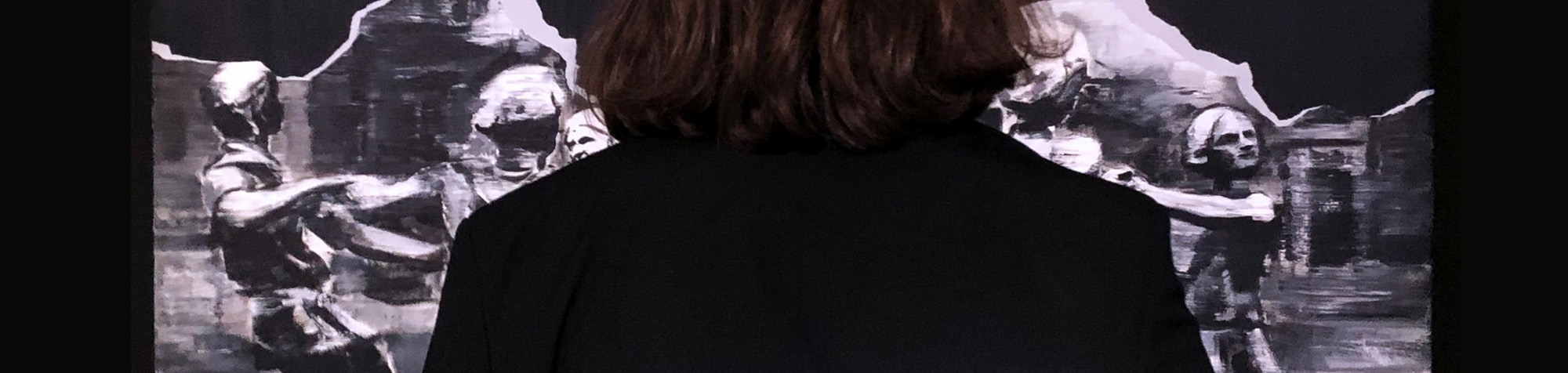
History of the Department
Many outstanding artists who have left a lasting mark on Polish and world art received their training in painting here. Among them was the great historical painter Jan Matejko, along with his students: Stanisław Wyspiański, Józef Mehoffer, and Jacek Malczewski. In the decades that followed, notable graduates included Louis Marcousis, Moise Kisling, Tadeusz Makowski, Stanisław Ignacy Witkiewicz, Jerzy Nowosielski, Andrzej Wajda, Tadeusz Kantor, Jan Szancenbach, Wilhelm Sasnal, and Jakub Julian Ziółkowski.
Majors and Curriculum
The Department of Painting prepares students for independent, mature artistic activity
. The department offers programs in the following fields of study:
- painting,
- set design,
- arts education in the visual arts.
Graduates of the painting program gain the qualifications to work independently as visual artists. They acquire both technical skills and the ability to engage in independent conceptual and critical work. They acquire knowledge of art history and theory necessary to formulate advanced projects and artistic realizations and to situate them within a broad cultural, historical, and social context. Thanks to the opportunity to design an individualized curriculum, the program develops artistic personality and the ability to work both independently and in groups. This applies to both painting and related artistic disciplines. The interdisciplinary nature of the program enables full participation in contemporary artistic life, as well as situating one’s own practice within the context of the art world. Studies at the Department of Painting enable the realization of artistic projects in diverse, multigenerational teams. Graduates are
prepared to collaborate meaningfully with cultural institutions, and
are familiar with the most important paths for artistic career development.
The five-year master’s program in set design prepares students to work
as set designers in theater, film, television, and opera. The program follows a two-track approach. On the one hand, students take courses in theoretical subjects such as the history of drama and theater, film, the history of material culture, and art. On the other hand, during the first two years of study, students participate in drawing and painting classes, and later in specialized studios focused on theater and film set design.
The courses support the synthesis of acquired skills and gradual development. Thanks to this educational system, supplemented by internships and workshops, graduates are prepared to pursue a professional artistic career in the field of set design. They are able to skillfully employ both traditional techniques and modern means of expression.
Mission and Goals
The Arts Education program is designed to deepen the knowledge and skills of active artists, participants in contemporary culture, cultural facilitators, and teachers in the fields of visual arts and media education. As part of the program, students gain knowledge in areas such as art history, copyright and education law, philosophy, teaching methodology, the promotion of visual arts, and art criticism—including elements of journalism and photography—as well as music culture and visual structures. In addition, courses are offered in painting, sculpture, drawing, printmaking, and multimedia.
Graduates are prepared to teach in all types of schools and in extracurricular educational institutions. They are also prepared to lead creative and art therapy workshops. They can pursue careers in marketing and promotion, in publishing houses, radio and television stations, museums, art centers and galleries, and institutions dedicated to promoting art, visual arts, and media.
Contact
Dean
Wojciech Kopeć, Ph.D., Eng., Arch.
Associate Dean
Dr. Radosław Szlęzak
Dean's Office
Agnieszka Manowiecka, M.A. – student affairs for the painting program
Sylwia Kurkowska – student affairs for the following programs: Set Design and Art Education in the Visual Arts
Patrycja Jewuła, M.A. – Administrative Matters
Address
3 Bernardyńska St.,
, 31-069 Kraków
1st floor, room 119